
First-time fix rate (FTFR) is the share of repairs completed correctly on the first visit. For the conclusion of the Service Readiness Series, Ralph Pompea brings all the previous points together around one, single, primary concept: FTFRs, or first-time fix rates. Ralph shows how a proper guided diagnostic solution drives FTFR and forms the central axis of good service readiness. Then, he explains how to get started.
Guided Diagnostics: Supporting First-Time Fix Rates and Service Readiness
The Troubleshooter AI-guided diagnostics tool is built on decades of OEM engineering data. Here’s how this particular tool works to improve first-time fix rates:
A technician enters a symptom. The system walks them through a dynamic diagnostic process, assigning the appropriate measurements and tests along the way. It quickly delivers them to the root cause and provides guided steps to confirm the diagnosis and complete the repair.
This practical mechanism executes the principles outlined in this series and transforms readiness from a capability dependent on individual experience into a repeatable process improving first-time fix rates across an entire service network.
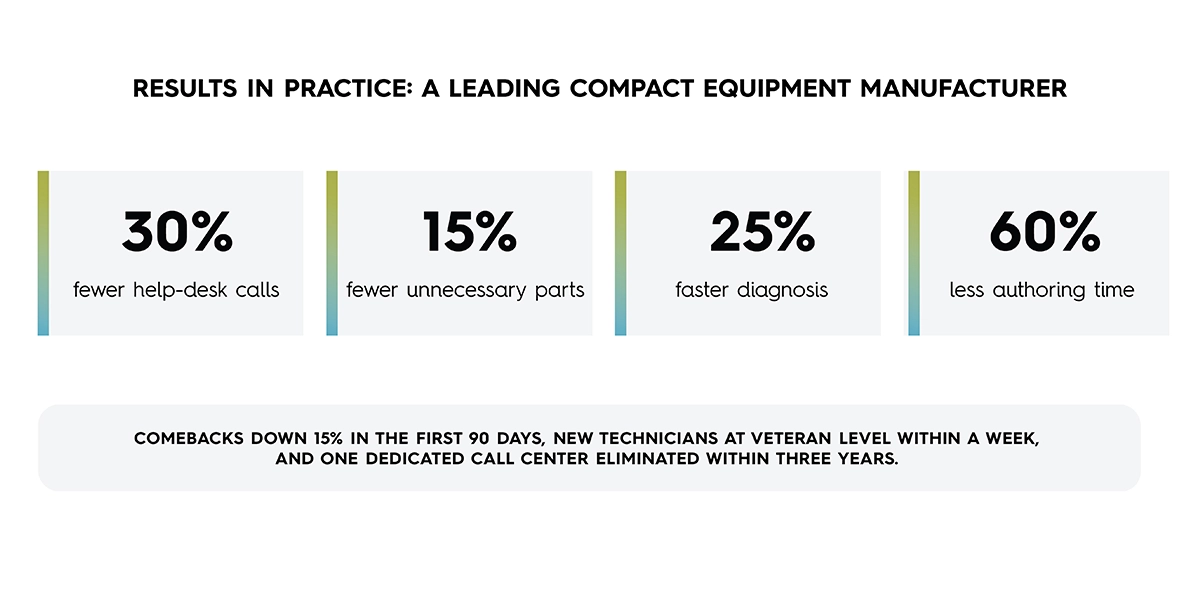
The system maps directly to the readiness model:
- Explorer (training on demand): Technician-facing guided diagnostics help turn any technician into a capable diagnostician without requiring formal training to use the platform. In fact, such a platform becomes the training, and provides it on demand. By providing the right diagnostic guidance at the point of need, a guided diagnostics tool improves first-time fix rates, improves service staff expertise, while also reducing diagnostic time.
- Designer: Subject-matter experts can author guided procedures up to 60 percent faster, helping diagnostic content keep pace with new vehicle platforms, technologies and launch timelines.
- Analyzer: Service leaders gain a network-level view of diagnostic patterns, failure modes and parts consumption. These insights support readiness KPIs and inform vendor and site governance.
- Advisor: Integration of telematics and DTC data enables more proactive, connected diagnostics as fleets and OEMs continue to move toward software-defined platforms.
For OEM dealers, this helps protect warranty compliance and CSI. For fleets and IAM networks, it helps standardize repair quality, improve first-time fix rates and uptime across locations.

In both environments, a guided diagnostics solution addresses the gap between veteran instinct and new-hire capability, delivering service readiness as training on demand rather than relying on years of individual experience that are increasingly difficult to hire and retain.
First-Time Fix Rates Results in Practice
First-time fix rate is the primary place where the value of service readiness shows up as measurable results, but it is by no means the only one. A leading compact equipment manufacturer put these principles into practice with Tweddle Group’s Troubleshooter and achieved significant improvements across its service network.
Situation: The manufacturer’s product line spanned more than 950 variants and was generating a heavy help-desk workload. Other negative symptoms included inconsistent diagnosis across a growing dealer network and, with so many product variables, poor learning curves for new technicians.
Approach: The manufacturer mapped more than 6,000 failure codes into Troubleshooter’s guided diagnostics procedures. The manufacturer’s own subject-matter experts authored the procedures in Troubleshooter Designer, then delivered them to technicians through Explorer. A gated call center access loop was created: technicians were first taken through a guided diagnostic procedure before having access to a call center escalation option.
Outcome: Within three years, the results were clear, and the company was able to eliminate one entire call center.
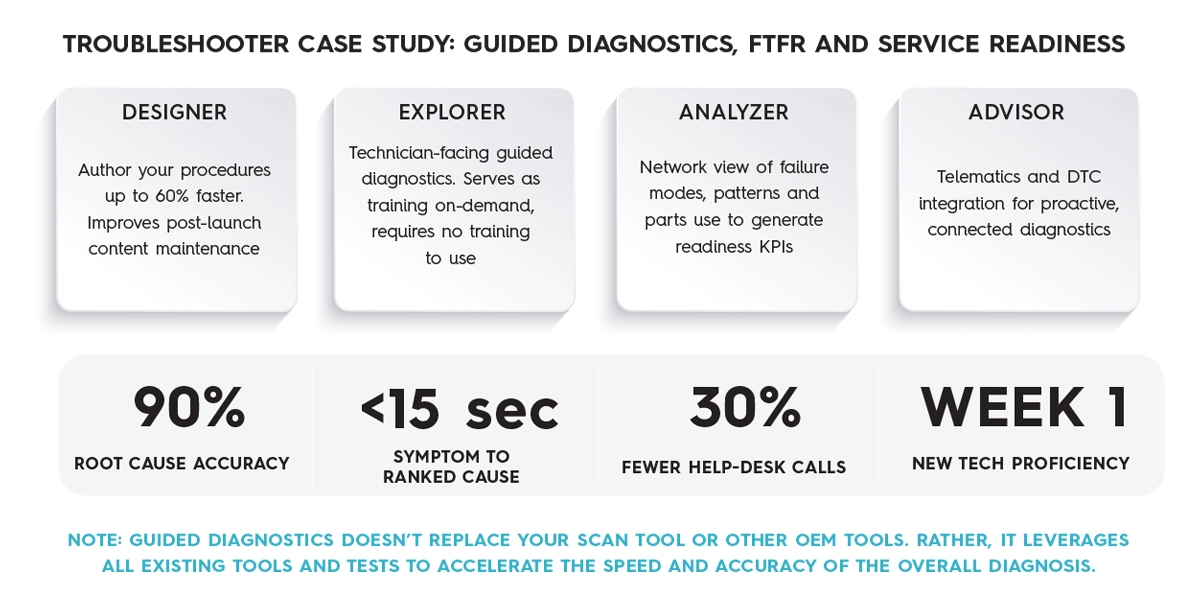
Beyond that headline result, a new technician could now reach the performance level of a three-year veteran within their first week. Comeback rates fell 15 percent during the first 90 days (and if you’re looking for evidence of better FTFRs, look no further). This pattern is consistent across deployments: a guided diagnostic layer helps elevate the performance of the entire workforce, allowing less-experienced technicians to apply the knowledge and diagnostic logic of the most experienced members of the network. This is the essence of service readiness, and it has a direct effect on first-time fix rates.
Creating Your Own Service Readiness Initiative
Service readiness is a capability you build over time, not a product you buy once. Three steps get it started:
- Score yourself against the maturity model in Part 1. Be honest about the level you’re at today, not the one you’re aiming for.
- Find your lowest score. That’ll be where your next investment pays the fastest return.
- Build the capability that closes that gap first.
Depending on your score, that capability could be guided diagnostics, training on demand, micro-learning, AR from CAD, SBOM-aware software support, secure access or the service-data loop, backed by the content, parts and tooling programs around them. It all adds up to true service readiness, which translates on the floor as high first-time fix rates.
More articles in this series: Part 1 | Part 2 | Part 3 | Part 4 | Part 5