
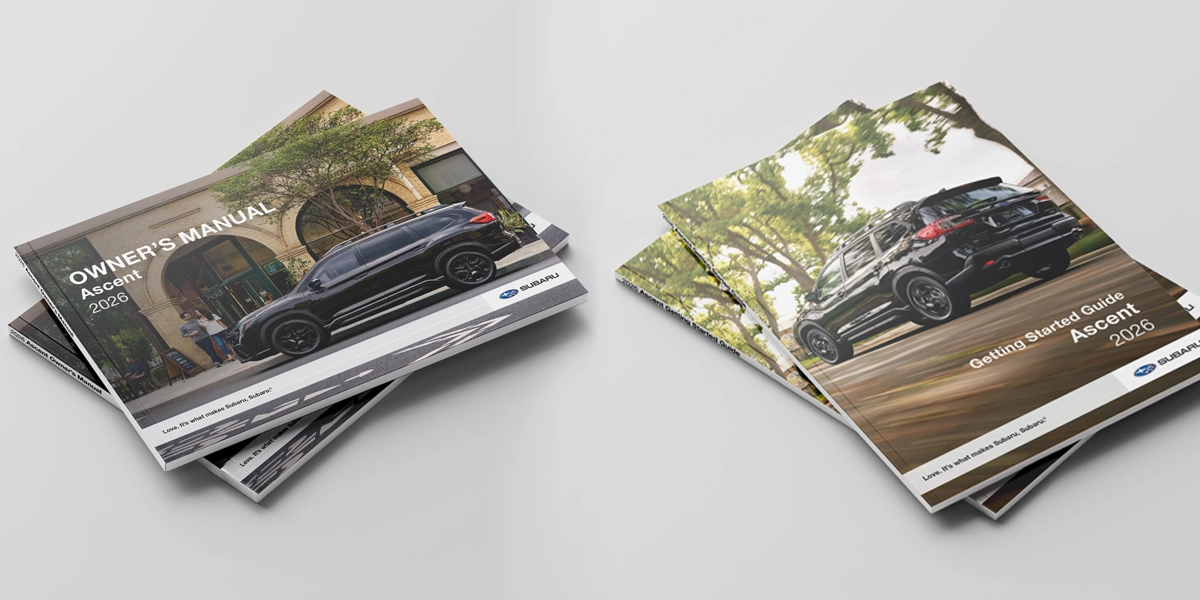
A QRG is designed around the product information a vehicle owner is most likely to need quickly. It distills a large body of content into an accessible format, highlighting common features, essential procedures and step-by-step instructions. Think of it as an abbreviated version of the full owner’s manual, with an emphasis on clarity, brevity and actionable, need-to-know information.
A sound automotive information strategy doesn’t ask whether the QRG or the full manual is better. It asks which format is best suited to the information needed at that moment.
Information Now: Why Owners Reach for the Quick Reference Guide
A vehicle is a uniquely information-dense product. Even relatively straightforward vehicles contain hundreds of controls, settings, warnings and operating conditions. Modern vehicles add another layer of complexity through increasingly sophisticated infotainment systems and Advanced Driver Assistance Systems (ADAS).
Most owners do not want to study all that information before driving. They learn by using the vehicle and consult product information when they encounter something they don’t immediately understand. Research cited in a PLOS study of ADAS manuals found that many drivers don’t read their manuals extensively, relying instead on trial and error, friends and family or other sources to learn about vehicle technology.
A QRG is designed for this moment. Instead of requiring a user to locate a topic within a large document, the QRG presents a limited number of high-value tasks in a format that’s easy to scan. Examples might include:
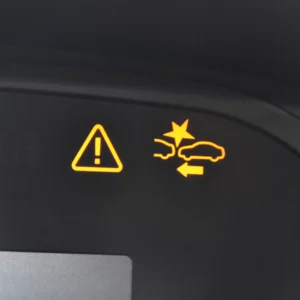
- Understanding dashboard controls and warning indicators
- Adjusting mirrors, seats or steering-wheel settings
- Connecting a smartphone
- Operating climate controls
- Performing basic roadside procedures
The QRG doesn’t simply contain fewer words. Its value comes from reducing the amount of information the user has to process to accomplish a particular task. The most useful information is not necessarily the most comprehensive information; it’s the information that helps the driver complete the task correctly with minimal searching.

The Owner’s Manual Search Problem
There is a fundamental usability advantage to limiting information to the task at hand.
A long-format manual naturally contains information that is irrelevant to most users at most moments. That breadth is valuable, but it also creates a search problem. The owner must identify the right section, interpret the terminology, navigate cross-references and determine which information applies to the situation.
Research examining automotive ADAS manuals illustrates this challenge. The PLOS study referenced earlier analyzed manuals from several high-selling vehicles and found substantial variation in how ADAS information was presented. The researchers also identified relatively high reading complexity. Across the manuals studied, the average readability score was 11.46 (which means roughly 11.5 years of education are required to understand the material), substantially above the six-to-eight-year education level recommended for material intended for a near-universal audience.
The issue is particularly important because ADAS information is not merely instructional; it contains critical information about system limitations, driver behavior and conditions under which a system may not operate as expected.
A well-designed QRG provides an approachable entry point for common tasks while directing the owner toward more complete information when necessary.
The Value of the Owner’s Manual
The full owner’s manual is the comprehensive source. Its purpose is not to compete with the QRG on speed, but to provide the breadth and depth necessary to understand the vehicle as a whole.
Consider a driver who is learning how adaptive cruise control works for the first time. A QRG can show the driver which buttons to press and how to activate the feature. The full manual can explain operating conditions, limitations, driver responsibilities, system behavior and circumstances in which the technology may not function as expected.
The same principle applies to:
- Detailed maintenance procedures
- Jump-starting procedures
- Tire and roadside procedures
- Vehicle specifications
- Safety limitations
- Detailed ADAS operations
- Warranty information
- Situations involving multiple conditions or exceptions
A QRG has to omit information to remain a QRG. Those omissions are precisely what makes it useful for quick retrieval but potentially inadequate as a standalone source.
The Danger of Oversimplification
A QRG should simplify the path to an answer without simplifying the safety boundaries surrounding that answer. For example, telling a driver how to activate an ADAS feature without communicating a critical operating limitation could create a false sense of understanding. The driver may know how to turn the system on without recognizing when it can and cannot be relied upon.
The goal should not be to put the entire owner’s manual into a shorter document, but to determine which information belongs in the quick-reference experience and which information requires the depth of the full manual.

Quick Reference Guide vs. Owner’s Manual: When Should an OEM Rely on a QRG?
For the OEM deciding what content goes where, the test should always be, “What information does the owner need at this specific juncture.”
The QRG is most effective when the user needs:
- Immediate answers. The user wants an answer now rather than an education in the entire vehicle.
- Common tasks. The task is likely to be performed by a large percentage of owners.
- Repeatable instructions. The user may need to remember the procedure but does not need to study it every time.
- Straightforward information. The task can be completed through a relatively short sequence of steps.
- Information low in exceptions. The procedure does not depend heavily on numerous conditions, limitations or alternate scenarios.
When Should an OEM Rely on the Full Manual?
The full manual becomes more important when information is:
- Complex. Multiple systems, conditions or procedures interact.
- Safety-critical. Missing a limitation or warning could create a safety risk.
- Unfamiliar. The user needs to understand not just what to do but when and under what conditions.
- Rarely used. A detailed explanation is more valuable than a condensed reminder.
- Exception-heavy. The procedure changes depending on vehicle configuration or circumstances.
- Regulatory or warranty-related. Complete information and precise language are necessary.
Each scenario represents a case where the quick reference guide, with its emphasis on brevity and bulleted instruction falls short of the longform owner’s manual.
Other formats can fill in the spaces between, including electronic QRGs, instructional videos, searchable digital manuals and AI-powered information retrieval.
This is the model behind OEMs offering companion owner information kits and a customer portal: print QRG, full manual and a VIN-aware digital layer connecting them.
The product information experience is a journey across multiple touchpoints, including manuals, customer support and digital resources, with the goal of meeting users with the information they need at the moment they need it. This philosophy becomes increasingly important as vehicles become more software-based and feature-rich.
The most effective automotive information strategy recognizes that users do not interact with information the same way every time. Sometimes they need to learn. Sometimes they need to troubleshoot. And sometimes they simply need to know which button to press.