Essential Special Service Tools (or ESSTs) satisfy an OEM’s responsibility to ensure its products can be properly diagnosed, serviced and repaired throughout their lifecycle.
One thing to keep in mind: the tool is not the starting point. The engineering design and intended service strategy come first; the essential tool is one of the outcomes of that process.
View essential tools as a form of insurance. When a specialized tool is needed, having it available provides the correct means of completing the repair. At the same time, there is no guarantee that every essential tool will be required by every dealer during the warranty period.
Previous Installments in the Service Readiness Series: Part One | Part Two | Part Three | Part Four
In Part 5 of the Service Readiness Series Ralph Pompea explains why essential tools exist, how OEMs define them, how their use varies according to regional practice and the common commercial models used to fund and enforce service readiness.
Why Essential Special Service Tools Exist
Essential Special Service Tools are more than specialized pieces of equipment. They represent a broader service strategy connecting engineering decisions to real-world repair requirements. When a vehicle or component incorporates new technology, proprietary designs or unique repair methods, the OEM must determine how to support the product in the field, and what technicians will need to service it correctly.
An essential tool is a tool or piece of equipment specified by OE engineering and required to complete a defined repair according to engineering specifications. While the terminology varies by industry and region, the concept extends well beyond automotive and off-highway applications. In some markets, an essential tool may also be referred to as a launch tool.

OE-Proprietary Products
Authorized repair supported by the OEM and, where applicable, by the OEM warranty requires a defined service strategy.
- Proprietary diagnostic tools: OE-specified tools used to diagnose concerns, perform required procedures and verify repairs.
- Proprietary OE parts: OE-specific components, including parts subject to warranty-return requirements where applicable.
- Proprietary repair and service methods: OE-defined procedures, specifications and standards for completing repairs.
- Recommended commercially available tools and equipment: Optional market-available tools that support repair quality, consistency and efficiency.
Launch Support
Launch readiness extends beyond Essential Special Service Tools. It encompasses the broader preparation required to support an exemplary customer experience from the moment a new product reaches the market.
Key elements include:
- Available products: Vehicles or products are on premises and ready to sell and service.
- Minimum parts stock order: Required parts are on premises before launch.
- Required sales and service training: Dealership personnel are trained before the product launches.
- Required essential tools: ESSTs are on premises and immediately available for use.
- Required service equipment: Equipment is installed, calibrated and ready for service.
How OEMs Define Essential Special Service Tools
OEM engineering decisions often establish the foundation for the service strategy. When an OEM designs specialized components or incorporates new technology into a product, those decisions can create unique service requirements that must be addressed before the product reaches the market.
The process can look like this:
- Components are sourced: OEMs source components, including new technologies, from internal programs or external suppliers.
- Unique service requirements emerge: New components may incorporate proprietary fasteners, designs, materials or technologies that require specialized repair methods.
- Service readiness is defined: The OEM establishes a service strategy and determines how the component or system will be diagnosed, repaired, replaced or overhauled.
- Repair procedures are developed: Approved service procedures, labor-time standards and body-repair procedures are created. Where required, Essential Special Service Tools and specifications are also defined.
The tool exists to support a specific product and the OEM’s plan for keeping it in service. Again, the tool is not the starting point.
Not All Essential Tools Are the Same
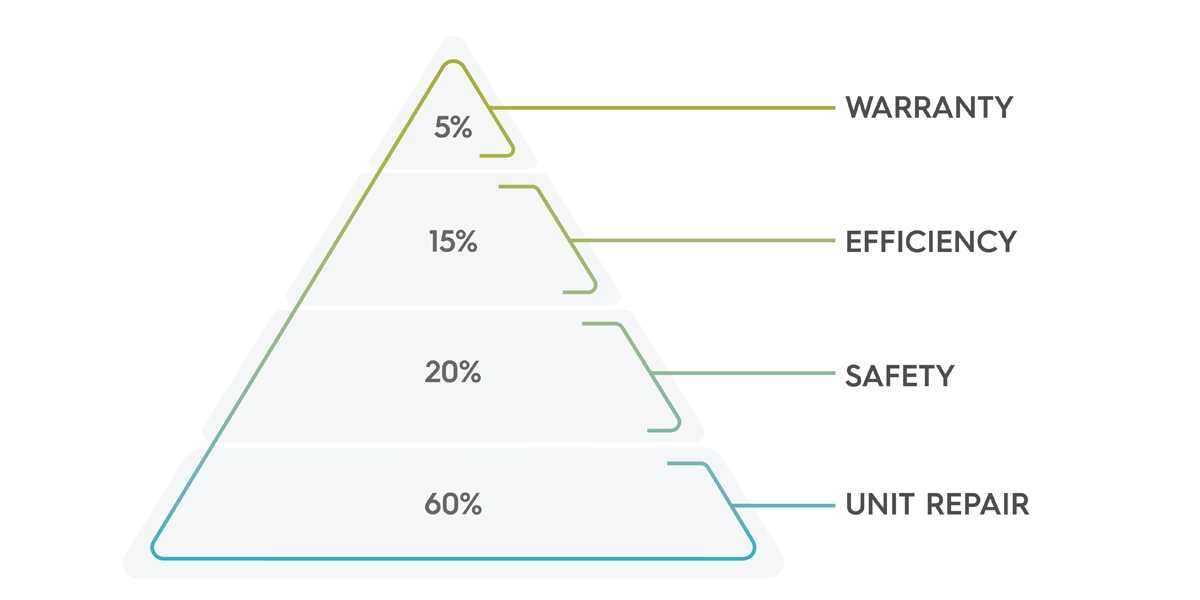
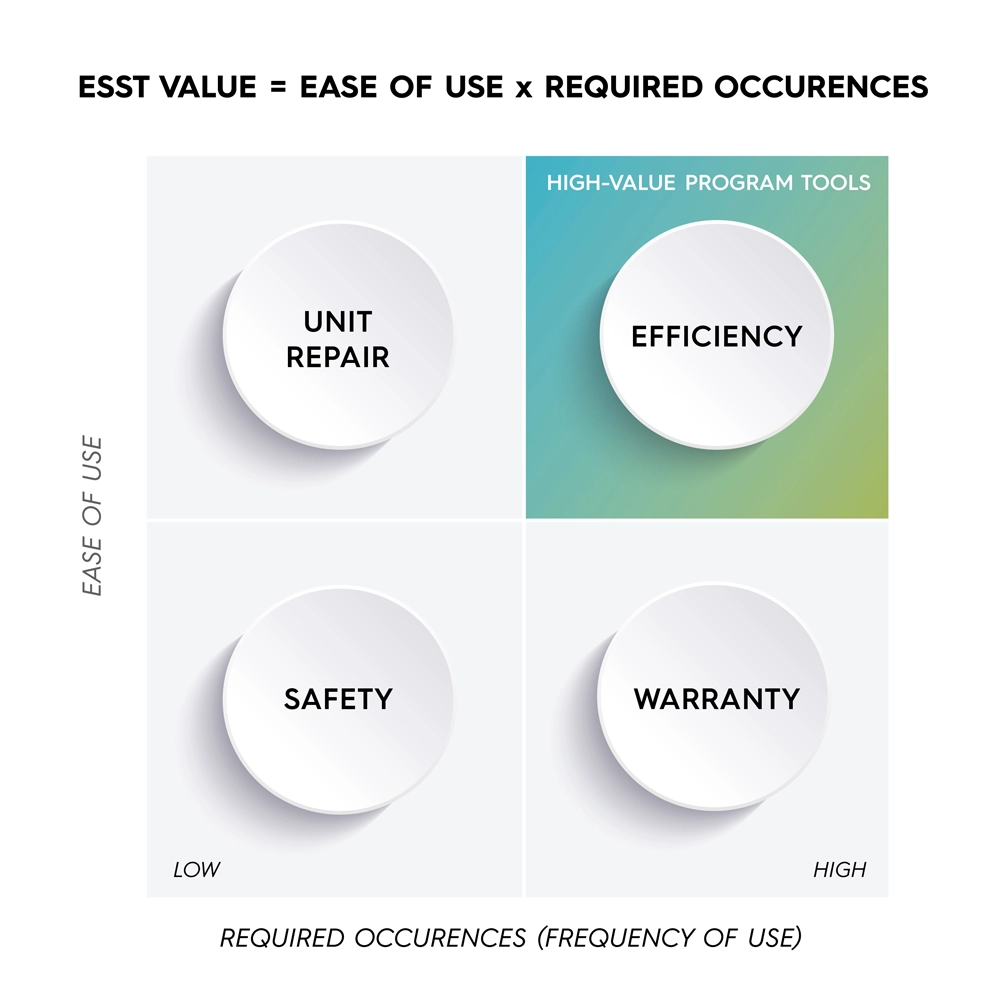
Not all Essential Special Service Tools serve the same purpose. All are identified as essential, and therefore required by the OEM, but they typically fall into several categories:
- Warranty: Tools released to address high-warranty repairs, safety campaigns or recalls after vehicles are already in the market.
- Efficiency: Tools that make a repair faster, easier or more consistent. The job may be technically possible without the tool, but doing so can increase the risk of damage, additional labor or rework.
- Safety: Tools designed to ensure repairs can be performed safely. Without the appropriate tool, technicians may otherwise resort to improvised methods, such as makeshift lifting brackets.
- Unit repair: Specialized tools, often hand tools, designed to perform a specific task on an individual component.
It’s also important to distinguish between an essential tool and a desired or recommended tool:
- Essential Tool (Special Service Tool): A tool not generally available on the open market but required by the OEM to ensure proper repair under a specific parts release and service procedure.
- Desired or Recommended Tool: A commercially available tool identified as the recommended solution for a particular task. Other market-available tools may also be suitable.
Over time, the distinction can evolve. An essential tool may become widely available in the marketplace and ultimately transition into a desired or recommended tool as it becomes a standard piece of equipment across the industry.
Daily Replacement Sales for Essential Special Service Tools
Daily replacement sales represent the ongoing demand for tools from past vehicle and product programs. The initial release of an ESST program is only one part of the tool lifecycle.
These tools are primarily associated with efficiency and unit repair. A tool that proves particularly useful may be purchased in additional quantities to improve shop and technician efficiency, while replacement tools are purchased as needed to avoid downtime or delivery delays.
Regional Approaches to Essential Special Service Tools
Essential-tool strategies vary by market because dealership structures, technician responsibilities, service models and levels of repair capability differ around the world.
North American Practice
In North America:
- Technicians generally supply their own basic hand and power tools.
- Technicians invest in tools that improve their personal efficiency.
- Dealerships provide ESSTs and service equipment.
- Technicians may also invest in selected ESSTs they use frequently.
These practices reflect a service environment in which technicians often have significant ownership of their individual tool sets, while the dealership remains responsible for providing specialized equipment required to support the OE service strategy.
Other Regional Practices
Regional differences extend beyond North America and can significantly influence how essential tools are distributed and managed.
- European practice: Dealerships typically provide most technician hand tools, power tools and ESSTs.
- Asian practice: Dealerships generally provide technicians with basic hand and power tools as well as all ESSTs. Lead dealers may perform the full range of repairs, while smaller local dealers focus on lighter repairs. These smaller dealers can be supported through within-network loaner programs, along with a limited offering of generally high-cost, low-usage ESSTs.
Global Service Strategies
Global service strategies are typically defined upstream with engineering and then supported through a global release and regional support plan.
Key considerations include:
- Regional basic shop competency: Establishing baseline assumptions for tools, equipment, skills and capabilities in each market.
- Assumed tools: Tools that are not explicitly listed as requirements but are expected to be commonly available based on regional service practices.
- Regional unit-replace versus unit-repair cadence: Defining the appropriate approach by region based on the service model. This can encompass service procedures and translations, parts release and stocking levels, and clear distinctions between required and recommended tools.
For programs where a component or unit-repair strategy is meant to stay in place for a defined period (for example, the first six months after launch), the plan can be run one of two ways.
A fleet strategy treats the early-production vehicles as a managed population: the OEM knows where they are, tracks their failures closely and applies the interim repair plan to that group until the permanent parts and exchange strategy is ready.
A sequestration approach holds failed components back from the normal scrap or exchange stream and returns them to the OEM, so engineering can analyze early failures while remanufacturing builds a core supply.
In either case, the plan can include:
- Service procedures and translations available at launch.
- ESSTs available at launch.
- Parts releases and stocking levels timed to coincide with the end of the component-repair strategy.
- Collection of cores to support remanufacturing.
Alternatively, a single global repair methodology can require all regions to follow one standardized approach:
- Global service procedures and translations available at launch.
- Global essential tools, with limited regional variation, available at launch based on local skill levels and competencies.
- Appropriate part-service levels available at launch.
Component Overhaul and Service Levels
Component overhaul accounts for a significant portion of Essential Special Service Tools. OEMs define service levels regionally, ranging from complete overhaul to subassembly repair and remove-and-install (R&I) or remanufacturing strategies.
- ESSTs: Typically mandated when a specialized tool is required frequently or at scheduled service intervals.
- Recommended tools: Commercially available tools used according to an approved repair method.
- Overhaul: Overhaul tooling concentrates in the dealer network because authorized dealers have historically been the primary parties with access to the applicable parts, procedures and ESSTs.
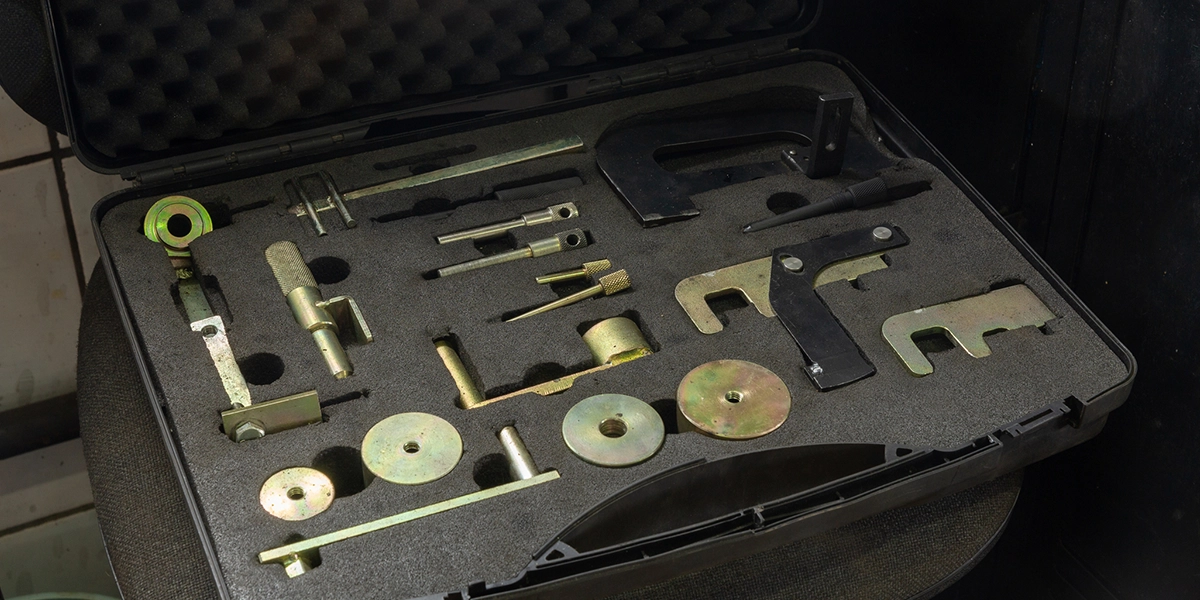
- Tool kits: ESSTs may be packaged as kits for servicing a particular component, such as a transmission. A kit may contain one tool or many tools, which can be used independently or alongside legacy essential tools already in the dealer network.
The service level selected by the OEM therefore has a direct impact on the number and type of tools required. A component designed for complete dealer overhaul will require a different tool strategy than one designed primarily for remove-and-install or exchange.
Commercial Models
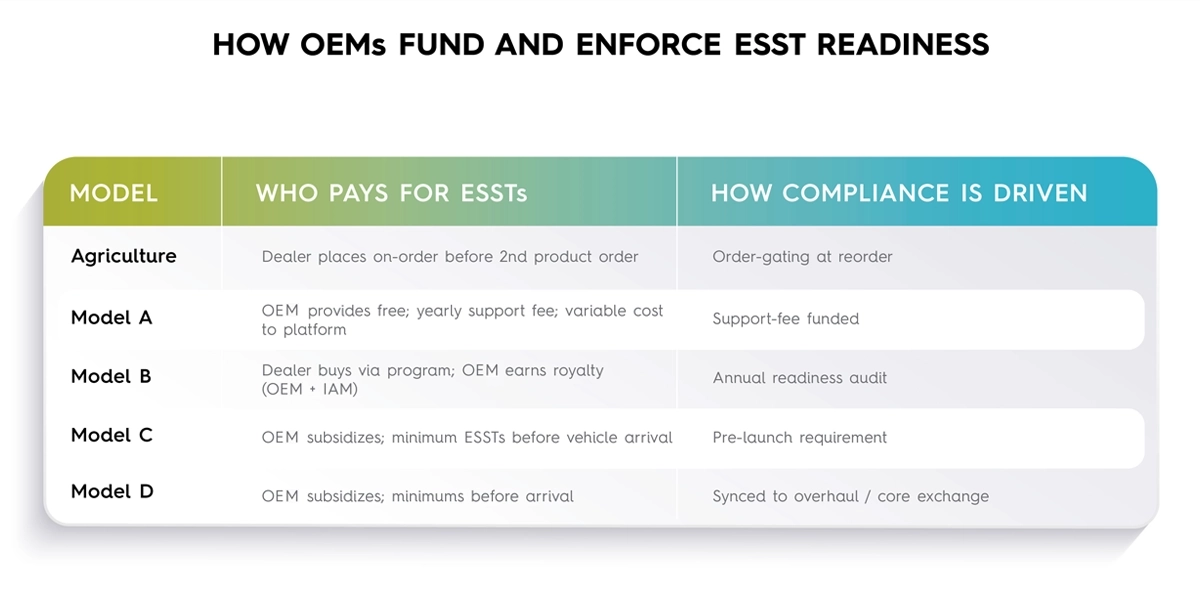
The agricultural equipment model below is followed by four ways automotive OEMs fund and manage essential-tool programs:

- Agriculture model: ESSTs are required to be on order before the dealer’s second product order may be placed.
- Model A: The OEM provides ESSTs to dealers without an express charge and establishes an annual support fee for service-readiness activities. Variable ESST costs are billed to the vehicle program requiring the tool.
- Model B: The OEM operates the ESST program as a for-profit channel. Tools and equipment are purchased through the program, with royalties driven by sales to all customers, including dealer and independent aftermarket (IAM) customers. Dealer compliance is supported through an annual service-readiness audit.
- Model C: The OEM subsidizes the program and requires a minimum set of ESSTs to be in place before vehicle arrival. Parts and training are also pre-launch requirements.
- Model D: The OEM subsidizes the program and requires minimum ESSTs before vehicle arrival, with overhaul-tool releases synchronized to the component-exchange and overhaul process.
These models demonstrate that essential-tool programs are not one-size-fits-all. The commercial structure must support the OEM’s broader service strategy while accounting for dealer readiness, tool utilization, timing and lifecycle requirements.
Goal Harmonization
An effective essential-tool program requires alignment across the entire service ecosystem. Engineering, service, dealerships, technicians, tool suppliers and other stakeholders each have different priorities, but those priorities must ultimately support the same objective: enabling the correct repair at the right time.
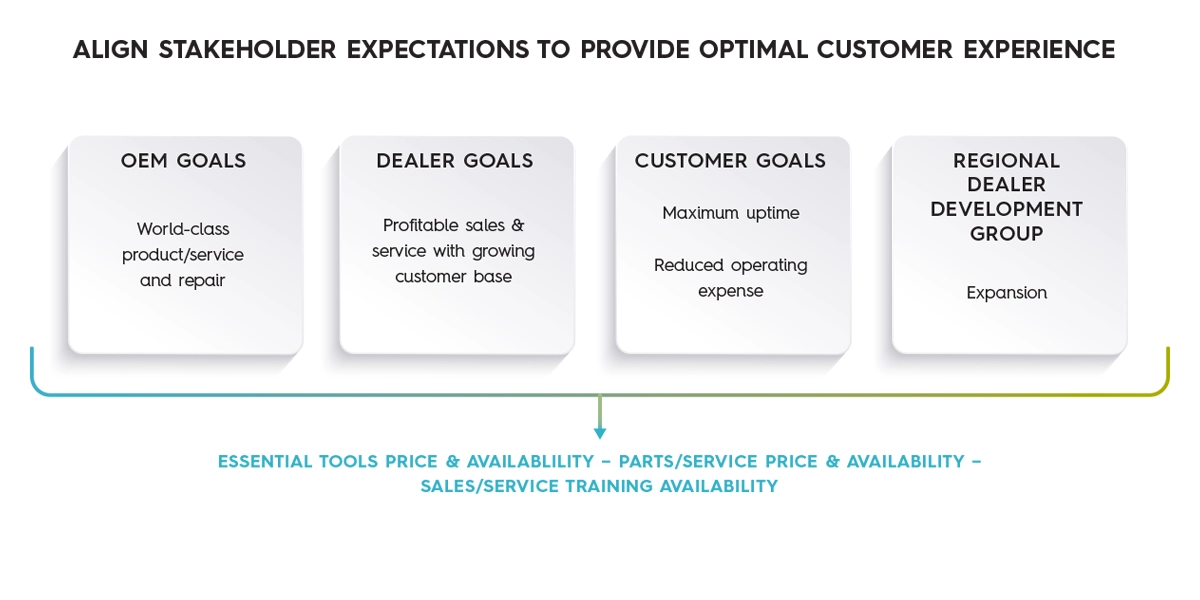
Ultimately, the definition and deployment of an essential tool depend on more than the tool itself. Engineering design, repair methodology, technician capability, regional service models, commercial structures and launch timing all influence what tools are required and how they are delivered.
A well-designed ESST strategy brings these factors together to make sure the right service capability exists when the customer needs it, supporting repair quality, technician efficiency, safety and long-term product serviceability.
In our final installment, Ralph Pompea looks how guided diagnostics solutions like Troubleshooter support proper service readiness in Service Readiness, Part 6.