
Miller outlined a range of employee activities directly supported by Tweddle Group. “We provide recycling receptacles for plastics, paper, cardboard, wood, plastic bags, and electronics,” she said.
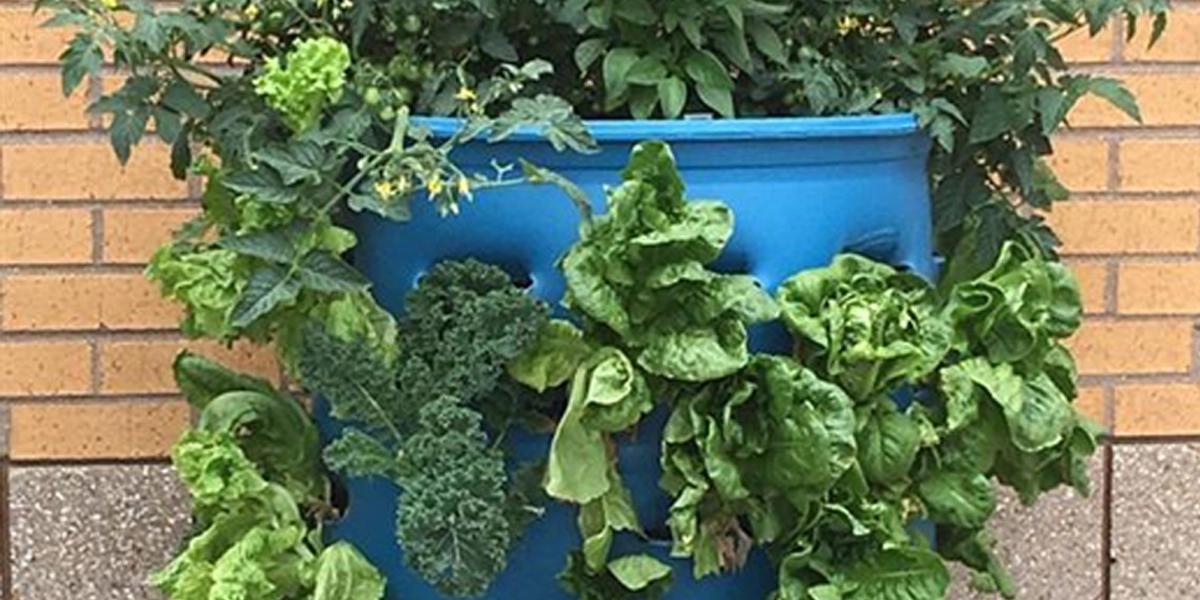
In her view, the vegetable garden and apiary at the company’s Clinton Township headquarters signal a real and practical environmental commitment. “Things like beekeeping and growing your own vegetables, these are great things anyone can do to create small but really meaningful impacts. They’re fun, and you learn a lot about sustainability just by doing them.”

Less Waste, More Value
There’s also an opportunity during Green Week to connect sustainability with innovation. Environmental challenges often require creative solutions, and organizations that approach them with curiosity rather than constraint are more likely to uncover new efficiencies and opportunities.
So, technology plays a role in supporting sustainability goals. Digital transformation efforts, when approached thoughtfully, help reduce reliance on physical materials. They eliminate material waste and make processes more efficient.
However, it’s important to balance these benefits with an awareness of technology’s own environmental footprint, including energy consumption. The goal is not simply to replace one system with another, but to design solutions that are efficient, scalable, and responsible.
“Print has been a pillar of our industry for so long, and it’s been wonderful to see how Tweddle Group acknowledges and mitigates environmental impacts even as digital takes over,” said Krista. “We try to look at entire supply chains and consider them through the lens of minimizing waste, making processes safer, reducing carbon footprint. And what we’ve found is, you can do all that while delivering high value to our clients and their customers. If anything, the value increases because there’s less waste.”
GREEN WEEK METRICS
The companies and individuals who successfully turn Green Week’s good intentions into lasting positive change all share two distinct factors: measurement and accountability. Clear metrics help organizations track progress, and make smart, data-driven adjustments. Green Week is the perfect time to review these metrics, to celebrate progress and recalibrate goals as needed. Without this level of accountability, sustainability efforts often lose momentum.
“We continually comply with our SGP (Sustainable Green Printing) policy and ISO 14001 environmental certification,” said Krista. “We even report out our emission reductions for customer-specified requirements.”
It’s important to recognize that sustainability is not a one-size-fits-all endeavor. What makes sense for one organization might not be applicable to another. Industry, scale and operational structure should all be considered when identifying the most meaningful opportunities. The key is to align sustainability initiatives with the realities of a business, while still pushing toward continuous improvement.
“The thing I love about working at Tweddle Group is that sustainability is seen as a fundamental part of operational excellence,” Miller says. “It isn’t treated as this separate initiative. It’s integrated into how projects are planned, executed and evaluated. Miller says that means, in actual practice, thoughtful resource management, a focus on efficiency and a commitment to reducing waste wherever possible.
While the specifics may vary by project, the underlying principle remains consistent: practical sustainability that’s real, measurable, and aligns with delivering value for clients.
GREEN WEEK AND BEYOND
Green Week reinforces that mindset by encouraging reflection and action at the same time: highlighting what’s already been done while identifying what comes next. For some organizations, that might mean formalizing sustainability goals or expanding existing programs. For others, it could be as simple as taking the first step—opening up a conversation, gathering data and starting a small initiative.
Wherever those efforts start, Miller feels the immediate environment should always be of primary importance.
“I think supporting your local community is a great initial focus for anyone looking to take action during Green Week,” Miller says. “But it also makes a great north star once your efforts are underway. It’s a good thing to keep coming back to. You can’t have a sustainable society without the contribution of smaller communities. Small impacts at a local level are the easiest way to do the most good.”
Green Week is a time to consider our environmental impact and shift our perspectives, to implement changes designed to create real, long-term effects. It constructively reframes sustainability from a distant objective to an active, present-day practice.
For companies looking to make meaningful progress, the takeaway is straightforward: start where you are, focus locally, and change what you can control for the better. Sustainability doesn’t require perfection to be effective. It requires clarity, consistency and a willingness to adapt over time.
Even small actions, when taken collectively, help create real change.