
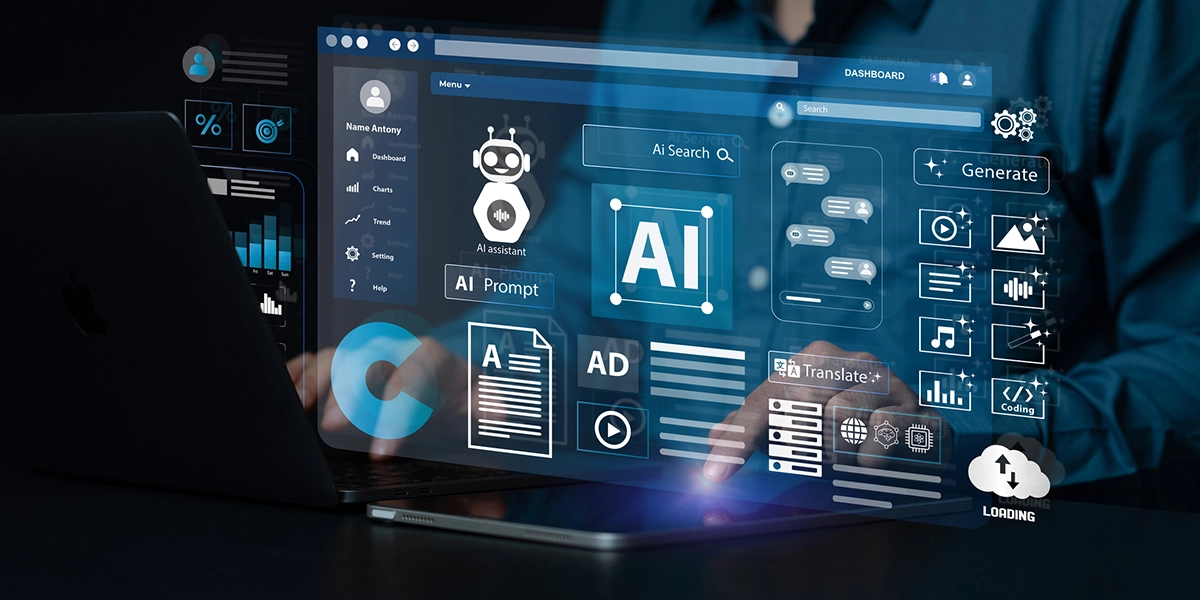

The Problem: A Model Built for a Different Era
Traditional content development was built around a simple process model:
- Gather information
- Write content
- Review and approve
- Publish
That model worked just fine when:
- Content volumes were manageable
- Updates were infrequent
- Delivery channels were limited
- Information was relatively static
Needless to say, none of those conditions are true anymore. Instead, organizations today are dealing with factors like:
- Exponentially growing volumes of source data (engineering, regulatory, marketing, support)
- Constant updates across multiple systems
- Increasing personalization expectations
- Shorter delivery timelines
- Growing compliance risk
And yet, many teams are still operating with workflows designed for a slower, more linear world. The result is not surprising. Content teams are spending more time managing complexity than they are delivering value.

Why AI in Content Development Is More Than a Writing Tool
When AI entered the chat, so to speak, many organizations defaulted to a familiar assumption of “AI will help us write faster.” They’re not completely wrong. AI can very easily do that, but focusing on AI as merely a writing tool is one of the biggest ways companies are limiting its impact.
During the podcast, I mentioned that while content generation is the most obvious application, it is not where we see the most meaningful opportunity in AI content development. The real value lies in improving the process around content. That is, how it is sourced, validated, structured and delivered.
This is where another important distinction comes into play: AI vs. automation.
Automation follows rules. It takes a defined input and produces a predictable output. AI, on the other hand, introduces flexibility. It can interpret, adapt and assist in ways that go beyond rigid workflows. But there is a very important caveat to that statement. If you apply AI to a broken or disorganized process, you amplify the problem rather than fixing it. As we said in the podcast: garbage in, garbage out.
When Traditional Content Workflows Break Under Modern Complexity
The traditional model isn’t just inefficient, it’s becoming unsustainable. Writers and content teams are increasingly responsible for:
- Interpreting multiple (often conflicting) source documents
- Cross-referencing technical and regulatory information
- Ensuring consistency across deliverables
- Managing version control
- Meeting compliance requirements
Much of that work is repetitive, manual and error-prone. Even more importantly, it’s not where human expertise adds the most value.
At the same time, expectations continue to rise. Content must be accurate, consistent and up-to-date. Those parameters become much harder to obey when users expect that content to be personalized and delivered across multiple channels and media formats.
The gap between what’s required and how content is produced is widening, and that gap is where traditional content development begins to break in favor of AI content development.
Shifting Toward AI‑Forward Content Development Models
The organizations that are moving forward aren’t just adopting AI as a draft generator, they’re changing how they think about content entirely.
Instead of asking something like “How can we use AI content development to improve what we already do?”, these organizations focus on the more poignant question of “How should we design our systems if AI is part of the foundation?”
Garrett described this as being “AI-forward“, a way of thinking about AI at the beginning of a solution, not as something you bolt on midstream and hope for the best.
This shift has profound implications. It requires:
- Designing workflows that assume automation and AI support
- Structuring content for reuse and machine readability
- Building systems to scale across wide product lines and multiple distribution channels
- To be “AI-forward” in this area means treating content as one part of a broader ecosystem, not a standalone deliverable.
AI Content Development as Enablement
One of the most common concerns surrounding AI is that it will replace human roles, particularly in content development.

The emerging picture reveals something quite different. AI is not eliminating the need for humans. Rather, it changes where their value lies. Tasks that are repetitive, time-consuming and rigidly process-driven are increasingly being handled by automation and AI.
This creates opportunities to direct more energy toward deeper tasks centered on judgment, context, nuance, accuracy and strategy.
In the podcast, we talked about how AI is already enabling people to do things they previously couldn’t. Someone with no coding background is now able to brainstorm and build simple applications. Automating workflows and accessing information has never been more efficient.
That same principle applies to content. The role of the writer is evolving from content producer to content validator, architect and strategist, representing an elevation in value rather than a reduction.
Where AI Content Development Still Falls Short
It’s also important to be clear and honest about where AI is not yet reliable. AI still struggles with things like:
- Ambiguity
- Highly subjective or creative decisions
- Incomplete or poorly structured data
These limitations matter, especially in highly regulated environments like technical documentation for automotive, heavy machinery or healthcare. Disregarding the risks associated often comes with severe consequences. So, it’s important to remember AI can assist, but should never be left to act as the final authority.
Today’s most effective AI content development models are not fully automated. Instead, they are “human-in-the-loop” systems, where AI supports the process, but humans remain accountable for the outcome.
The Hidden Barrier: Organizational Readiness
Technology is only part of the equation. In many cases, the bigger challenge is organizational.
To truly shift toward an AI-driven content model, companies need:
- Clear processes
- Structured data
- Defined standards
- Governance and auditability
- Cultural buy-in across the organization
Without these, even the best AI tools will fail to deliver meaningful results. There’s also a tendency, especially right now, to overstate progress. Everyone is looking for the next “big win” and it’s easy for all of us to get a little ahead of ourselves. As a result, companies claim AI success without having the systems or safeguards in place to support it.
The Bottom Line: This Isn’t Incremental Change
What we’re seeing isn’t just another evolution in content tools. It’s a deeper, fundamental shift in how content is created, managed and delivered. And, ultimately, how it is valued.
Organizations that treat AI as a layer on top of existing workflows will see incremental gains.
Organizations that rethink their systems around AI will see transformation. And that transformation is already underway.
What Comes Next
If Part 1 is about recognizing that the current model is breaking, Part 2 is about understanding what replaces it.
The good news is that many organizations already have the foundation they need. They’re sitting on years of structured, validated content, often in formats like XML or DITA. The issue is that they are not fully realizing its potential in an AI-driven world.
The question isn’t whether they have the right data. It’s whether they’re ready to use it.
In Part 2, we’ll explore how structured content, modular workflows and AI systems come together to form a new model for content development and why the organizations that embrace it early will have a significant advantage.